
.jpg)


Is Gen Z unfairly losing out on entry-level jobs to older applicants?
- cmdcareers2
- Aug 6
- 2 min read
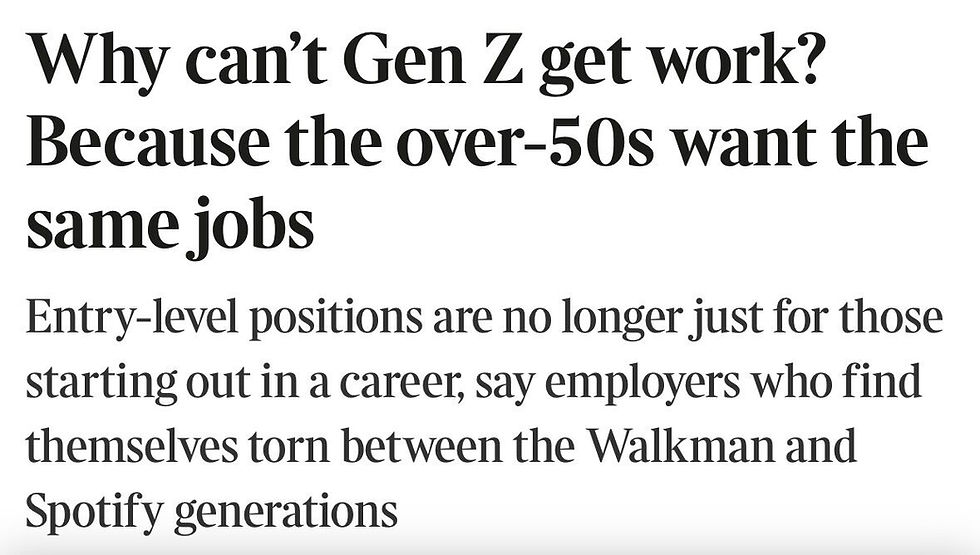
A recent article from The Times explored an interesting challenge facing today's labour market. The discussion wasn't centred on the level of competition between members of Gen Z themselves.
Instead, it focused on the growing competition between Gen Z and workers aged over 50 who are applying for many of the same roles.
The ongoing cost of living crisis has changed the employment landscape. Many older workers are choosing to remain in work for longer, return after retirement, or move into higher-paying positions to better manage rising household expenses.
This creates an increasingly competitive market for entry-level and junior positions. While many students and graduates are leaving university with degrees, internships and work experience, they are often competing against candidates who bring decades of professional experience.
From an employer's perspective, an experienced candidate may require less onboarding, less training and be able to contribute immediately. That can make them an attractive option when businesses are operating under financial pressure.
Of course, this isn't the whole picture.
Technology continues to reshape the workplace, and younger generations may have an advantage in areas such as digital tools, AI and adapting to new technologies. Having grown up in an increasingly digital world, many Gen Z candidates are naturally comfortable with the technology that is becoming central to modern businesses.
However, one message remains clear.
A university degree on its own is no longer enough to stand out.
Experience has become one of the most valuable assets a candidate can demonstrate, whether that's through internships, placements, part-time work, volunteering or extracurricular projects. Employers increasingly want evidence that candidates can apply their knowledge in real-world situations.
But this raises a bigger question.
If experience is now one of the biggest differentiators, should employers be investing more heavily in early career opportunities that allow young people to gain it in the first place?
Without sufficient internships, placements, apprenticeships and graduate programmes, many students find themselves caught in a difficult position: they need experience to get a job, but they need a job to gain experience.
As conversations around youth unemployment continue, perhaps the focus shouldn't simply be on how competitive the labour market has become.
It should also be on how we create more opportunities for the next generation to develop the experience employers increasingly expect.
Should employers be investing more in early career opportunities to help even out the playing field?


Comments